I'll be looking out for events like Telectroscope (2008) – "the secret tunnel that runs deep beneath the Atlantic Ocean" connecting New York and London and Down the Rabbit Hole (2008), a multi-arts event inspired by Alice in Wonderland.
The Beginning of the End...
I'll be looking out for events like Telectroscope (2008) – "the secret tunnel that runs deep beneath the Atlantic Ocean" connecting New York and London and Down the Rabbit Hole (2008), a multi-arts event inspired by Alice in Wonderland.
Our Skin Never Forgets
Summing up sustainable design
Be it in industrial design, architecture, fashion, engineering or graphic design, sustainable design is viewed as the way forward. It's about what we use and how we use things, and far from having to give up an entire lifestyle, I feel it's more about being as efficient as we can. It's about being more responsible and aware of the repercussions of our actions, without having to live like hermits. It's also about coming to terms with a different way of thinking.
The School of Visual Concepts, Seattle, together with AIGA Seattle, have come up with 101 Things Designers Can Do to Save the Earth, and some of the tips that stood out for me were:
#94. Try not to bleed
Bleeding requires printing on oversized stock with more ink, which all gets trimmed off and discarded as waste. So it's worth considering smaller sizes that fit within standard sheet sizes.
#64. Develop packaging with multiple uses
Instead of designating used packaging for recycling, how can we design it to be reused for another purpose beyond merely containing a product?
#63. Start with the need, not the end result
"What else could you do to accomplish the client’s objectives without necessarily going with paper or energy-based solutions?"
Beyond following guidelines, sustainable design can be truly inspiring in its outcome, and I couldn't resist sharing these!

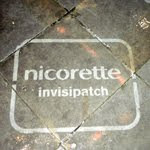
London-based Curb, provide achingly cool advertising solutions, as their work attests. They've developed sea tagging (top image), using sea water to create visuals – the salinity means that the images evaporate at a considerably slower rate than normal water, and clean advertising, using custom made equipment that lifts dirt from surfaces to create messages. And there's a whole lot more, ranging from bioluminescence to moss art and solar art.
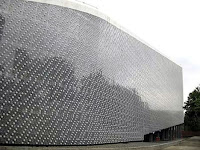
In the field of architecture, EcoARK in Taiwan, certainly embraces the concept of recycling wholeheartedly with its construction from a mind-blowing 1.5 million PET bottles. At three stories high, it features an amphitheatre, an exhibition hall and even a screen of falling water that is collected when it rains to be then used as air conditioning.

Smaller in scale, but big in impact, is Puma's commendable effort in reducing its shoe packaging by proposing the use of a recycled PET bag (recyclable too) with a single sheet of cardboard. If implemented, Puma stands to save 8,500 tonnes of paper, a million litres of water and a million litres of fuel, reduce paper needs by 65% and annual carbon emissions by 10 tonnes! This forms part of their efforts to develop a 360 Sustainability Program called PUMAVision – puma.safe, puma.peace and puma.creative, which will no doubt be interesting to follow.
It's a mad, ad world
While advertising is often portrayed as an evil entity unleashing torrents of the next gleaming thing for innocent consumers to get hooked onto in its bid to empty pockets and profit that big corporation, I struggle to be completely sold by that concept.
A necessary evil, perhaps.
As it happens, I believe that the role of advertising is primarily to sell a product, be it goods and/or services, or to raise levels of awareness. I rather like the uplifting definition by the Advertising Standards Authority (ASA) as well – "Advertising... informs, entertains and promotes healthy competition". Now that, I reckon, could be a healthy way to view it.
If we think of advertisers as potential suitors courting a valuable interest (yes, that's you and me, folks), maybe we'd remember that our role here as the prized consumer is one that gets to make the choices. Having options (and plenty of it) can't be all bad.
Ultimately, advertising needs to keep to the path of the straight and narrow when it comes to ethics. Generally, adverts must not mislead and overpromise, or offend. There are more specific codes in relation to children, alcohol, gambling, motoring and health and financial products, with an overall emphasis of responsibility. In the UK, the latest round of advertising codes are set to come into effect on 1 September 2010.
There has been much debate on advertising for beauty products of late, with a greater call for honesty given the industry's notorious reputation in manipulating images to represent 'natural' beauty, which is being blamed for unhealthy obsessions with weight and appearances in society. To this end, it is reassuring to note that Cheryl Cole's hair extensions and various other models' eyelash extensions have been mentioned in shampoo and mascara adverts respectively, to avoid being misleading.
Good advertising to me, is about meeting consumers' needs in a way that is entertaining and leaves them wanting more. As a creative, generating a good piece of advertising is all about the big idea. A good big idea is one that grabs attention. A great one leaves a lasting impression. As a consumer, a good advert is one which allows me to develop a sense of affinity for the brand. I might not rush out and get my hands on the item advertised, but I'm more likely to consider it as an option if and when I might need something similar in future.
Bad advertising is one which is patronising. Consumers are way more sophisticated than what some advertisers would like to believe (marketing departments, are you listening?). Poor execution, cliche ideas, awful stereotypes – one has to wonder how they got approved.
All wrapped up in packaging


Apart from fulfilling the basic functions of housing a product and administering its contents, perhaps one of its most important roles while being simultaneously overlooked, is its use in differentiating products. As the Design Council puts it, how would you be able to choose one shampoo from another without its packaging?
In terms of aesthetics, the prevalent trend for contemporary packaging design seems to be more pared down and minimalistic, for eg. Selfridges, with clear, strong typefaces and block colours being the predominant look, and where possible, revealing the product as well – a style which seems to mark a return to a more functional form of design.
The combination of simple yet striking illustrations is also a popular trend (see references below), although who can resist witty solutions to packaging? I really like the singular thought behind Scanwood wooden kitchen utensils and the concept for Hanger Tea.
'Green packaging' though, is likely to be the benchmark for the future of packaging design, given the spotlight on sustainability, with issues such as excessive packaging impacting the environment and the recyclability of the materials used. Additionally, the Design Council points out that palette maximisation in transporting goods needs to be considered – the amount of air that is shipped needs to be minimised while maximising the number of products per pallet, besides having packaging that is able to last throughout the life cycle of the product.
Championing socially responsible design
"Social responsibility has economic and environmental dimensions. This broad perspective is often described as a commitment to “sustainability,” which has become a term-of-art for advancing economic activity while ensuring that we can sustain our activities in a sometimes fragile world without harming the future’s potential." – Richard Grefe, executive director AIGA (the professional association of design)
More Associates are loyal to this cause, and have formulated their design approach around 4 main principles; namely user-centred design, sustainable design, evidence-based design and interdisciplinary design. Research here seems to be key to their operations and in collaborating with academics, scientists, designers and engineers, 'form and function' definitely seems to be the order of the day. What strikes me as truly heartening is their pragmatism; they acknowledge that "conflicts" and "bad habits" need to be worked around while still benefiting the bottom line and yet, are able to marry this in aesthetically pleasing solutions.
And to prove that they practise what they preach, even their stationery has been carefully produced so that a single print run is able to produce business cards, postcards and posters with the use of 2 different weighted stocks.At IDEO, they've summed up their "approach to innovation" as Design Thinking, also drawing from a range of different disciplines in a "human-centred, iterative and practical approach". Discovering the breadth of speakers (IDEO Voices) they have on issues from aging to education, mobility and user interface design is simply mind-blowing.
What I find truly inspiring is how their work seems to defy boundaries, and why shouldn't it, seeing that they've whole-heartedly embrace Design Thinking in such a holistic manner? From brand identity and packaging design for Pangea Organics including a compostable bar soap box made from 100% post-consumer content, to crafting a cool-to-the-touch kettle and a clothes hanger that uses heat to remove wrinkles, IDEO also apply themselves to cultivating user experiences such as that of the American Red Cross Donors'.


